
Government Violence.
|
|
Let’s speak clearly and without flinching.
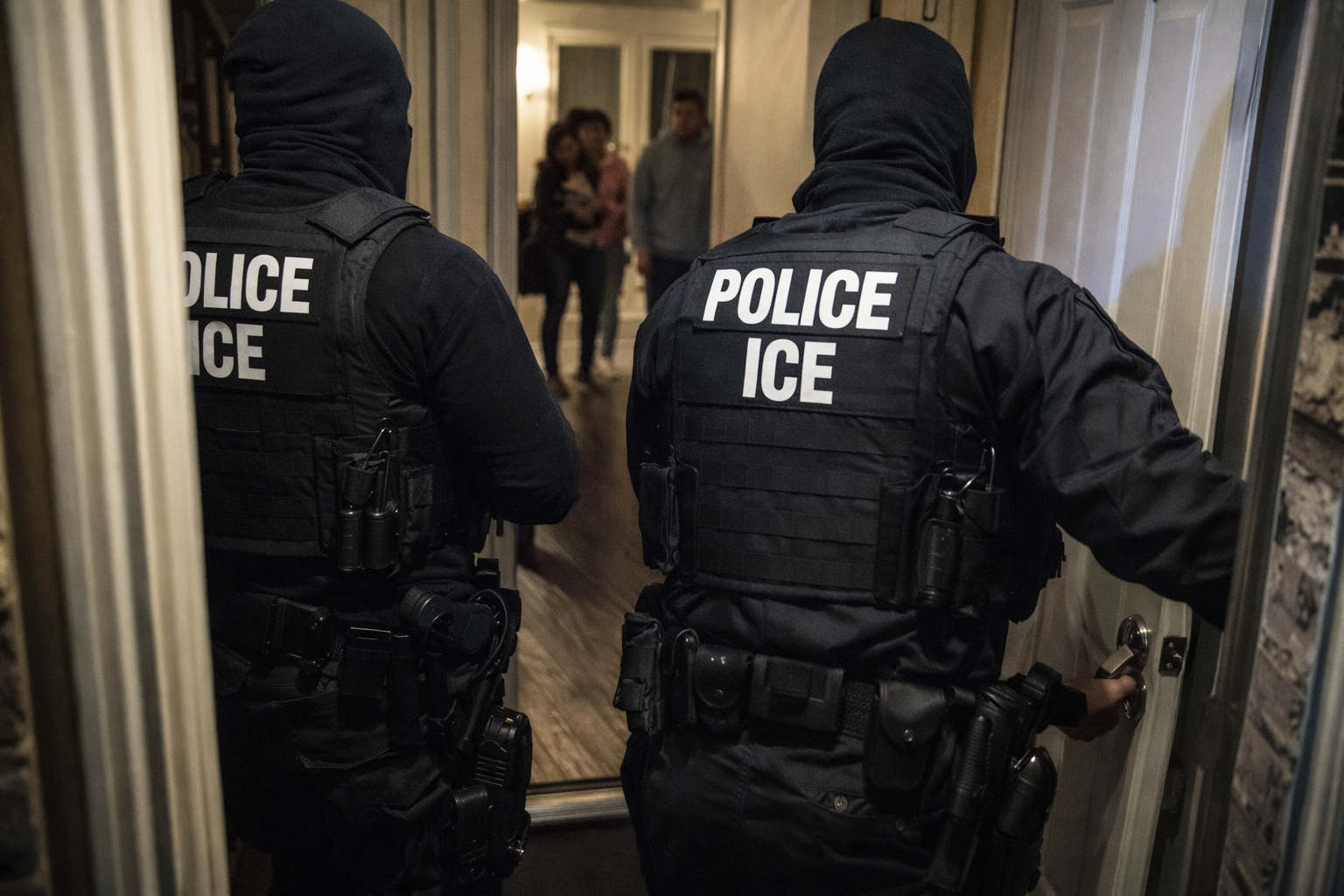
When armed agents drag a mother and her children through the dirt in the name of “policy,” that is force. When the state knows families will be traumatized and does it anyway, that is intentional harm. And when a president amplifies that energy, frames it as strength, and builds political capital off of it — that’s not accidental. That’s a choice.
Donald Trump didn’t invent enforcement. But he poured gasoline on it. He normalized language that turned neighbors into threats and migrants into enemies. He made hardline crackdowns a spectacle. He taught a portion of the country to cheer when the government flexed its muscle on the vulnerable.
 |
 |
Now let’s talk about rights.
In the United States, citizens have constitutional protections that are not supposed to bend with whoever is in office. The Fourth Amendment protects against unreasonable searches and seizures. The Fifth guarantees due process. The Fourteenth promises equal protection under the law. Those aren’t decorations. They are guardrails.
When enforcement becomes indiscriminate, when fear spreads beyond undocumented communities and into neighborhoods full of lawful residents and citizens, something deeper cracks. Because when the government grows comfortable using overwhelming force on one group, history shows it rarely stops there.
What do you call it when leadership frames parts of its own population as invaders? When rhetoric paints internal communities as existential threats? When executive power expands in ways that sidestep compassion and strain constitutional boundaries?
That’s not “putting America first.” That’s flirting with the logic of a state that sees its own soil as hostile ground.
A president is sworn to preserve, protect, and defend the Constitution — not test how far it can be stretched. Not weaponize federal authority for applause lines. Not create an atmosphere where citizens begin to wonder if their rights depend on who they are or where they came from.
A nation at war with its own people doesn’t look like tanks in the street. It looks like fear becoming normal. It looks like power exercised without restraint. It looks like the slow erosion of rights while people argue about optics.
Strength isn’t how hard a government can strike. Strength is how fiercely it protects the liberties of its citizens — even when it’s inconvenient, even when it’s politically costly.
Violence doesn’t become just because it’s legal. And power without accountability isn’t leadership.
It’s domination wearing a suit and a flag.
Add a reply
You must be logged in to post a comment.